
The Institutions Around Meyer
The Collini CaseThe company, prosecutor’s office, archive, and court each shape what can be known about Meyer and what forms of accountability remain possible.
increasing Bearing strength in each event
 decreasing
Bearing strength in each eventdecreasingThe Company Protects Its Name
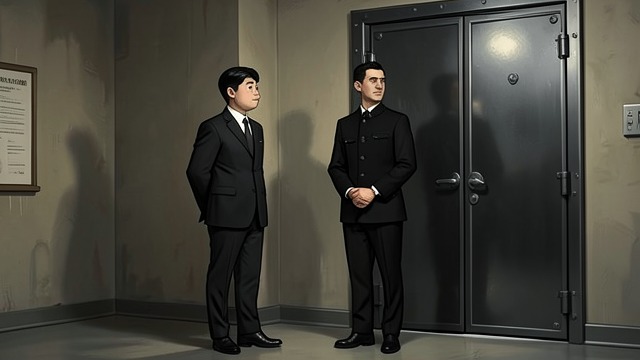
The Company Protects Its Name
Business anxiety
Meyer Engineering Works fears publicity and the effect of the murder on its plans. Its lawyer seeks to manage the company’s connection to the proceeding.
Institutional self-interest
The company’s priority is reputational stability, not the unexplored wartime history. Its intervention reveals how powerful organizations respond when private conduct threatens public standing.
A File in Stuttgart

A File in Stuttgart
Investigation initiated
The Stuttgart Public Prosecutor’s Office investigates Meyer’s wartime role after Collini makes a complaint. A record is created, but the investigation never reaches a full examination of Meyer.
Procedure shapes memory
The existence of a file can suggest accountability where no trial occurred. Its later interpretation depends on understanding why the state stopped.
An Archive Preserves What Courts Miss

An Archive Preserves What Courts Miss
Historical material retained
The Ludwigsburg branch manages documentation assembled by the Central Office. Its collection preserves records of Nazi crimes and later investigations.
Evidence beyond litigation
The archive can supply facts long after a prosecution has ended. Its work provides Leinen with the basis to distinguish an untried allegation from an exonerated defendant.
The Court Permits the Expert

The Court Permits the Expert
An unusual application
Mattinger asks to call Dr Schwan without the usual advance arrangements. The presiding judge allows her testimony, warning that the procedure is exceptional.
Open contest
The court makes room for new evidence rather than limiting the hearing to its original schedule. That flexibility allows the legal meaning of the archive to be tested publicly.
A Ministry Reexamines Its Past

A Ministry Reexamines Its Past
Institutional review
The Federal Minister of Justice appoints a committee to reassess the ministry’s Nazi-era legacy. The novel is named as one point of reference.
The record persists
The legal questions raised in the trial extend beyond its fictional courtroom. Historical accountability can continue through institutions tasked with examining their own inherited structures.
Immediately after Meyer’s murder
1968–1969
After the Federal Archive branch opens in 2000
The hearing after Leinen’s historical account
January 2012
